Partnerships · September 2026
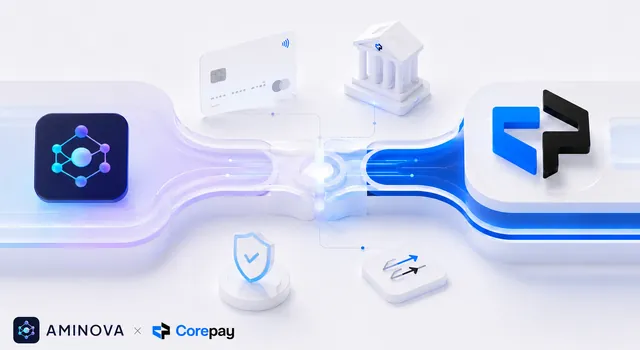
Aminova × The Payment Doctor
Merchant accounts underwritten for the medicine you actually practise.
Getting a merchant account is not the hard part. Keeping one, as a practice whose revenue includes prescriptions, is — and that is an underwriting problem, not a software problem. The Payment Doctor partnership is how we stopped handing clinics that problem to solve alone.

Aminova is partnering with The Payment Doctor, the processor we point clinics to, underwritten for the kind of practice mainstream processors quietly decline: hormone therapy, GLP-1 programmes, peptide and longevity practices — anywhere the revenue includes a prescription.
The problem behind every frozen account
A clinic opens a processing account in ten minutes, runs visits and medication charges through the same checkout, and somewhere between month two and month six the account is reviewed, restricted or frozen. It is rarely a judgement about the practice. Mainstream processors are underwritten for retail and e-commerce, their terms list pharmaceuticals and prescription products as prohibited, and enforcement is automatic once the pattern becomes visible in the volume.
The fix is not a cleverer description on the charge. It is being underwritten, at the outset, for the business you are actually running — and that is a job for somebody who does this every day.
What the partnership is — and what it is not
- The clinic holds its own merchant account. The application, the underwriting file and the processing agreement are between the clinic and the processor. Aminova is not a party to it.
- Clinic funds never flow through Aminova. We are not a payment facilitator and have no interest in becoming one. Revenue settles to the clinic.
- Aminova stays the software layer. Checkout, routing, receipts and reporting live here; the rail lives with the processor. Nothing about this partnership changes who holds the money.
- Boarding is not automatic approval. Underwriting is underwriting. What changes is that the file is prepared by people who know what this category has to show.
What it changes at the checkout
One patient, one total, one receipt — and behind it, each line settles where it is underwritten to settle. The visit, the membership and the retail item run on the clinic’s ordinary rail. The medication charge runs on the one built for prescription commerce. The patient sees a single transaction with the clinic’s name on the statement; the clinic stops carrying a structural risk it never chose.
That split has to be enforced in software rather than in a policy binder. A checkout that lets a front-desk member put a medication charge on the wrong rail undoes the whole arrangement the first time it happens at volume — so Aminova routes it by what the charge is, not by who is ringing it up.
How a clinic gets boarded
Clinics apply directly with The Payment Doctor. Expect an underwriting file rather than a sign-up form: medical licence, DEA registration where controlled substances are involved, the entity and its ownership, a description of the service menu, and processing history if there is any. A practice that has already been shut off by a mainstream processor should say so — that history is ordinary in this category and it is better handled at the start than discovered later.
Talk to us first if you would rather see the whole picture — how the split works in your actual service menu, what goes on the statement, and what reporting looks like when two rails sit under one checkout.
Talk to our team about payments
Tell us what you sell and how you sell it — we’ll tell you plainly which rails fit.